
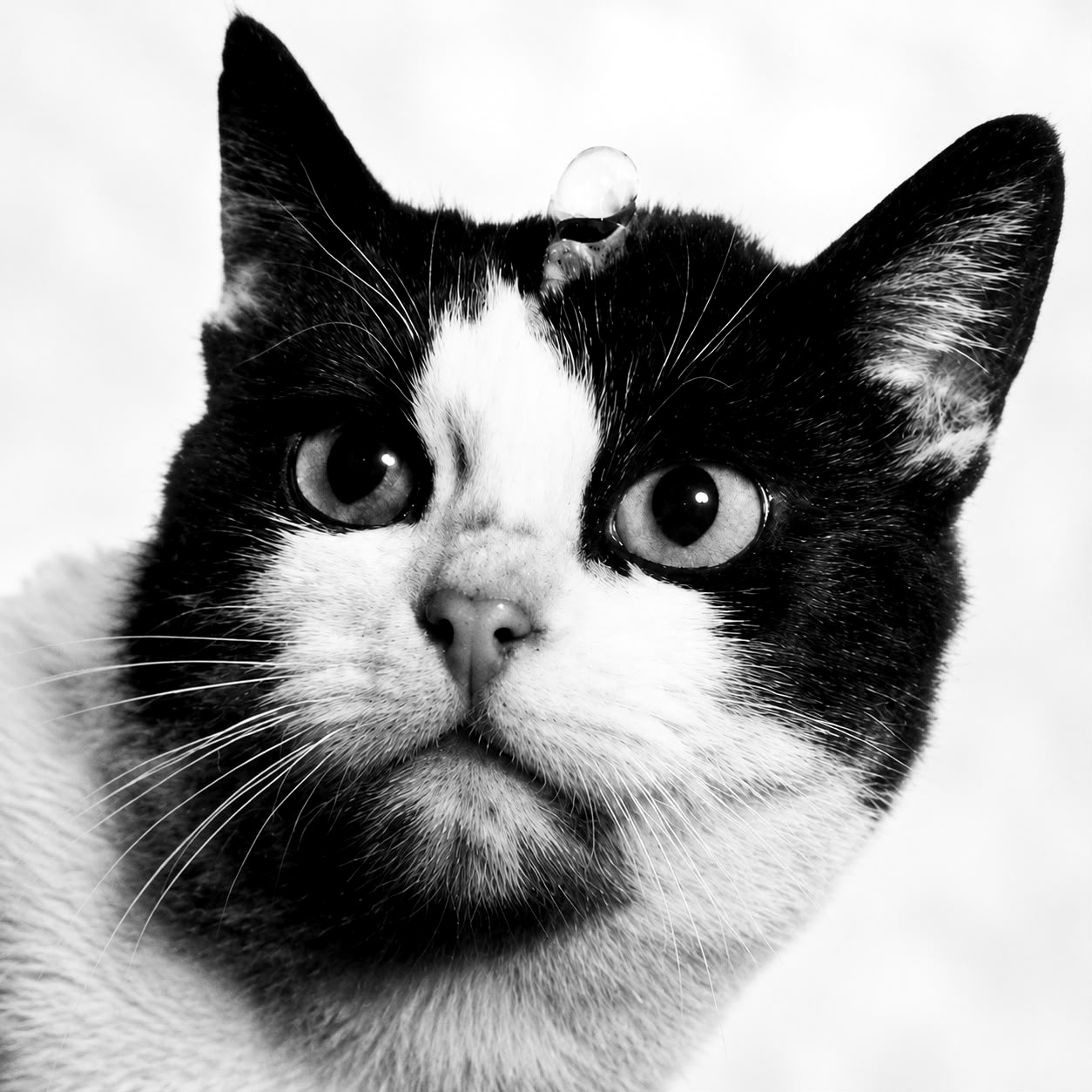
In the autumn of 1963 the French space programme bought fourteen cats from a dealer in Paris. None were given names — a named animal is harder to lose. They were fitted with electrodes, taught to sit still in a cylinder, and spun in a centrifuge until the flight surgeons were satisfied.
The one they chose was C 341: a tuxedo female, roughly two and a half kilos, calm under restraint. On 18 October 1963 she was sealed into the nose of a Véronique AG1 sounding rocket at the Hammaguir range in the Algerian Sahara and fired straight up.
The burn lasted forty-two seconds. She crossed the Kármán line, coasted through five minutes of weightlessness, peaked at 152 km, and came back down under a parachute. A helicopter recovered the capsule thirteen minutes after launch. She was alive and unhurt.
The press named her afterwards, for the papers: Félicette. Two months later she was euthanised so her brain could be studied. The results were never published.
She went further than any cat has been, and for fifty-four years there was not a single monument to her.